“I’m Fine”: The Most Dangerous Lie in Relationships
/If you have ever been in a relationship for more than a few months, chances are you have heard the phrase. One partner asks what is wrong, and the other responds with the familiar words, “I’m fine.” In that moment, most experienced husbands, wives, boyfriends, and girlfriends know that something much deeper is probably happening beneath the surface.
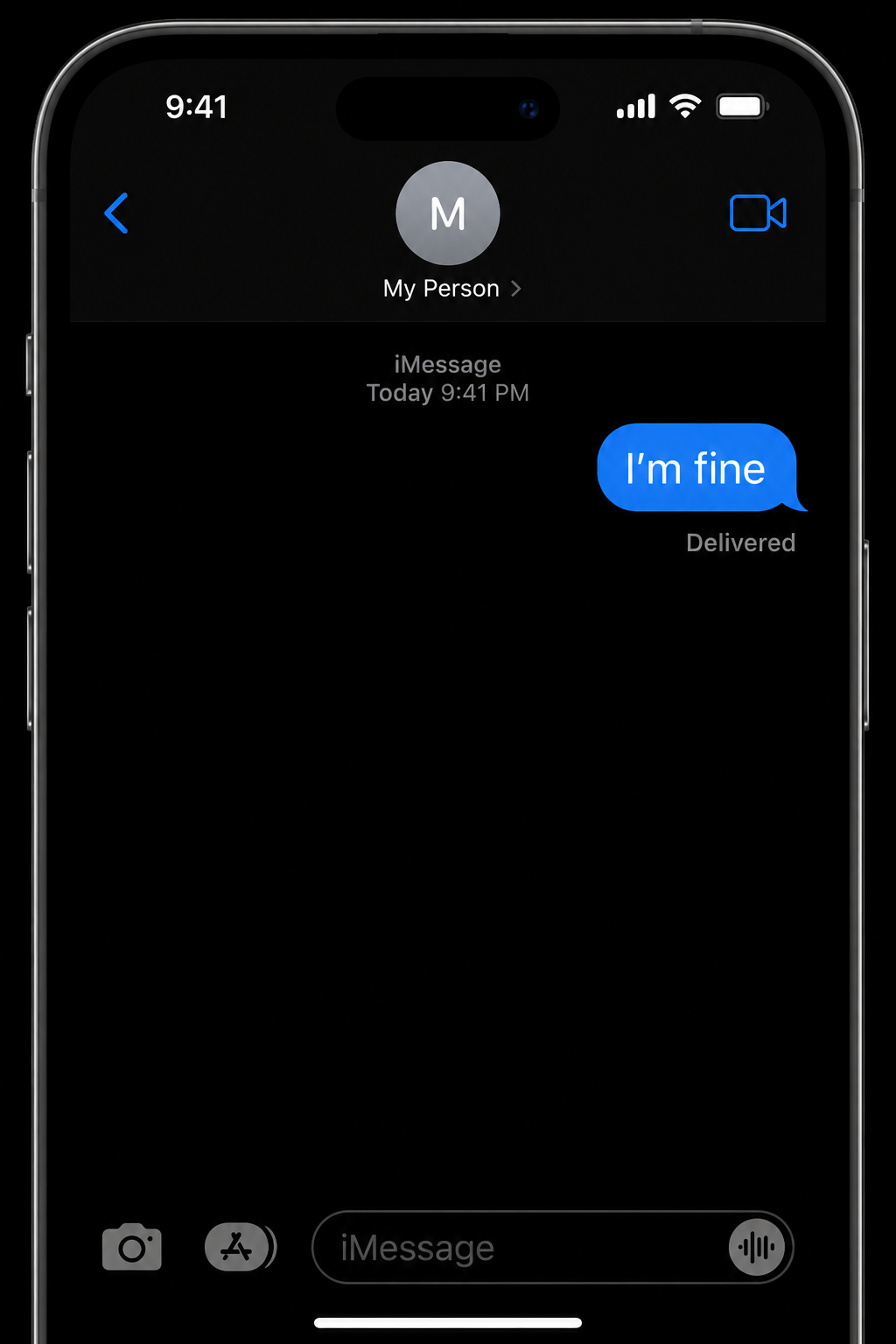
Text exchange ending in “Im Fine”
The phrase has become such a recognizable part of relationship culture that it is often the subject of jokes, memes, and comedy routines. People laugh because they can immediately relate to the experience of hearing someone say they are fine while every facial expression and nonverbal cue suggests otherwise. Although the phrase is often treated humorously, it frequently points to a much more serious issue that can quietly damage emotional connection over time.
Most people assume the problem is emotional suppression, but the issue often runs deeper than that. What is really happening is emotional self-abandonment, which occurs when people repeatedly ignore their own feelings, needs, disappointments, and desires in order to avoid discomfort. While this may create temporary peace, it often comes at the expense of genuine connection and long-term relationship health.
As a couples therapist, I have learned that many relationship problems do not begin with explosive arguments or dramatic betrayals. Instead, they often begin with small moments when someone chooses not to share what they are actually feeling. Those moments may seem insignificant at first, but they can slowly accumulate until the emotional distance between partners becomes difficult to ignore.
The truth is that most people who say “I’m fine” are not intentionally trying to deceive their partner. In many cases, they are trying to protect themselves from vulnerability, rejection, or conflict. They may also be trying to protect their partner from discomfort or attempting to prevent what they fear could become an argument.
Many people learned early in life that expressing emotions carried risks. Some grew up in homes where conflict was discouraged, while others learned that sadness, fear, or disappointment were signs of weakness. When emotional expression is repeatedly dismissed, criticized, or ignored, people often learn that staying silent feels safer than being honest.
Over time, silence can become a deeply ingrained habit. Instead of saying, “That hurt my feelings,” a person convinces themselves it is not worth bringing up. Instead of saying, “I feel lonely,” they try to push the feeling aside and tell themselves they should be grateful for what they have.
This pattern often feels effective in the short term because it prevents uncomfortable conversations. There is no conflict to navigate, no difficult emotions to discuss, and no immediate tension between partners. From the outside, the relationship may even appear peaceful and stable.
Unfortunately, what looks like peace is often avoidance wearing a disguise. True peace is built on honesty, understanding, and emotional safety, while avoidance is built on fear and self-protection. The two may look similar on the surface, but they produce very different outcomes over time.
One of the most common outcomes of emotional self-abandonment is resentment. Many people believe resentment appears suddenly after a major offense, but that is rarely how it develops. More often, resentment grows through hundreds of small moments when someone chooses silence instead of honesty.
Imagine a spouse who feels hurt because their partner forgot an important date or failed to follow through on a commitment. Rather than expressing their disappointment, they tell themselves it is not a big deal and say they are fine. A few days later, they feel overwhelmed by responsibilities at home but decide not to ask for help because they do not want to create tension.
As the weeks pass, those experiences continue to accumulate. Small disappointments remain unspoken, emotional needs remain unmet, and frustrations remain unresolved. What started as an effort to avoid conflict gradually becomes a growing collection of emotional wounds.
Eventually, something seemingly insignificant happens. Perhaps a spouse leaves dishes in the sink, forgets to send a text message, or arrives home later than expected. Suddenly, an argument erupts that appears completely disproportionate to the situation.
The dishes were never really about the dishes, and the text message was never really about the text message. The intense emotional reaction is often connected to months or even years of unresolved hurt that has never been discussed openly. By the time the frustration surfaces, it is carrying far more emotional weight than anyone realizes.
This is one reason resentment can be so confusing for couples. One partner is reacting to the entire history of accumulated disappointments, while the other partner is only looking at the current situation. Because each person is viewing the conflict through a different lens, they often feel misunderstood and frustrated with one another.
Another way emotional self-abandonment shows up is through passive resentment. This occurs when someone says they are okay with something on the outside while internally feeling angry, disappointed, or hurt. Rather than expressing those emotions directly, they begin keeping score in ways that often remain invisible to their partner.
A person may agree to take on extra responsibilities, only to later feel resentful that nobody noticed their sacrifice. They may repeatedly say yes when they want to say no, then become frustrated that others continue asking for more. Over time, they begin expecting their partner to recognize needs that were never actually communicated.
This creates a painful cycle because the partner being resented often has no idea what is happening. They may genuinely believe everything is fine because that is exactly what they have been told. When resentment eventually surfaces, both partners can feel blindsided and confused.
Another common form of emotional self-abandonment involves pretending not to care. Someone may tell themselves that an issue does not matter because acknowledging their feelings feels too vulnerable. While this strategy may provide temporary protection, it often creates long-term disconnection from both themselves and their relationship.
Many people have said things like, “It doesn’t matter,” “Whatever you want is fine,” or “I really don’t care.” In some situations, those statements may be true. In many others, they are simply safer than admitting disappointment, fear, insecurity, or sadness.
The problem is that our emotions do not disappear simply because we ignore them. Feelings that are repeatedly dismissed often find other ways to express themselves. They may emerge as irritability, criticism, emotional distance, anxiety, or resentment.
Over time, some people become so skilled at ignoring their emotions that they begin experiencing emotional numbing. Emotional numbing occurs when a person disconnects from uncomfortable feelings so consistently that they also lose access to positive emotions. What begins as a strategy to avoid pain eventually reduces the capacity for joy, excitement, closeness, and connection.
Many individuals describe this experience by saying they feel detached or emotionally flat. They may no longer feel intense anger or sadness, but they also struggle to feel enthusiasm, affection, or emotional engagement. Their relationship begins to feel more like a partnership between roommates than an emotionally connected bond.
This is one reason emotional honesty is so important. The goal is not simply to reduce conflict. The goal is to remain emotionally alive and connected to both yourself and the people you love.
I often see couples enter therapy believing their problem is communication. As we explore their relationship more deeply, we discover that communication is only part of the story. The larger issue is that one or both partners have spent years minimizing, dismissing, or hiding their emotional experience.
For example, a spouse may spend years saying they are fine whenever they feel hurt or overlooked. Their partner eventually assumes there are no significant concerns because none have been expressed. By the time the struggling spouse finally speaks honestly, they may be carrying years of accumulated pain.
The irony is that many people hide their emotions because they want to preserve the relationship. They fear that expressing their feelings will create conflict or push their partner away. In reality, the ongoing absence of emotional honesty often creates the very distance they hoped to avoid.
Vulnerability is uncomfortable because it involves risk. Whenever we reveal our true feelings, we create the possibility of misunderstanding, disappointment, or rejection. At the same time, vulnerability is also the pathway to intimacy because it allows people to know us in a deeper and more authentic way.
This does not mean that every emotion should be expressed impulsively or without consideration. Healthy communication involves honesty delivered with respect, self-awareness, and emotional regulation. Sharing feelings constructively is very different from attacking, blaming, or criticizing a partner.
Many couples mistakenly confuse avoidance with harmony. They point to the fact that they rarely argue as evidence that everything is going well. However, when couples stop discussing meaningful issues altogether, the absence of conflict may actually be a sign that emotional engagement is fading.
Healthy relationships are not defined by the absence of disagreements. Instead, they are defined by the ability to address difficult topics while maintaining respect and connection. The goal is not to eliminate conflict but to create an environment where honesty feels safe enough to occur.
For people who find themselves saying “I’m fine” frequently, a more helpful response may be something like, “Something is bothering me, but I need a little time to sort through my thoughts.” Another option might be, “I feel hurt, and I am afraid this conversation could become an argument.” These responses allow for honesty without creating unnecessary defensiveness.
For the partner on the receiving end, curiosity is often more effective than pressure. Rather than demanding answers or insisting that everything be discussed immediately, it can be helpful to communicate care and availability. Statements such as, “I care about what you are feeling, and I am here when you are ready,” create space for vulnerability without forcing it.
The most dangerous phrase in relationships is not necessarily “We need to talk.” While that phrase may create anxiety, it at least signals a willingness to engage with what is happening. The phrase “I’m fine” becomes dangerous when it serves as a barrier between a person and their own emotional reality.
The next time you feel tempted to say those two familiar words, pause for a moment and ask yourself a different question. Instead of asking whether it is worth bringing up, ask whether staying silent is helping you stay connected to yourself and your partner. In many cases, the answer may reveal that honesty is actually the safer path.
Healthy relationships are built when two imperfect people learn to tell the truth about what is happening inside them. They grow stronger when partners choose honesty over avoidance and vulnerability over self-protection. Although saying “I’m actually not fine” may feel uncomfortable in the moment, it is often the first step toward deeper connection, greater understanding, and lasting intimacy.
To start this journey, you can contact Ross here.