You’re Not Crazy… You’re Attached! Understanding anxious and avoidant patterns in long-term marriage
/
Early in our marriage, my wife and I had a recurring argument that made absolutely no sense. I would come home from a long day feeling tired but accomplished. In my mind, I had done what a responsible husband should do. I had worked hard, provided, and kept things moving. I was ready for a quiet evening and a mental exhale. She would greet me warmly, and within minutes, she would say something simple like, “Hey, can we talk for a minute?”
Somehow, that harmless sentence would hit my nervous system like an alarm. What she meant was, “I miss you” or “I want to connect.” What I heard was, “You’ve failed.” I would grow quiet and measured. I told myself I was staying calm, but really I was pulling back. She would feel that distance immediately and interpret it as disinterest. Within 10 minutes, we weren’t talking about whatever practical issue had prompted the conversation. We were debating tone, intent, and whether we were even on the same team. At the time, I genuinely wondered if one of us was irrational. Now, years later, and after sitting with hundreds of couples in my office, I understand something much more hopeful. We weren’t crazy… we were attached.
attachment in relationships
When people hear the word attachment, they often think about parenting, childhood development, or something reserved for psychology textbooks. But attachment does not disappear when you become an adult. It transfers.
In a long-term marriage, your spouse becomes your primary attachment figure. That means your nervous system treats this person as your emotional home base. They are your safe place, your regulator, your anchor.
When the connection feels solid, your body relaxes. When connection feels threatened, even subtly, your body reacts. Your heart rate increases. Your muscles tighten. Your thoughts get sharper and sometimes harsher. You interpret more quickly and more defensively. This isn’t immaturity. It’s biology. The brain is wired to protect attachment bonds because, historically, connection meant survival.
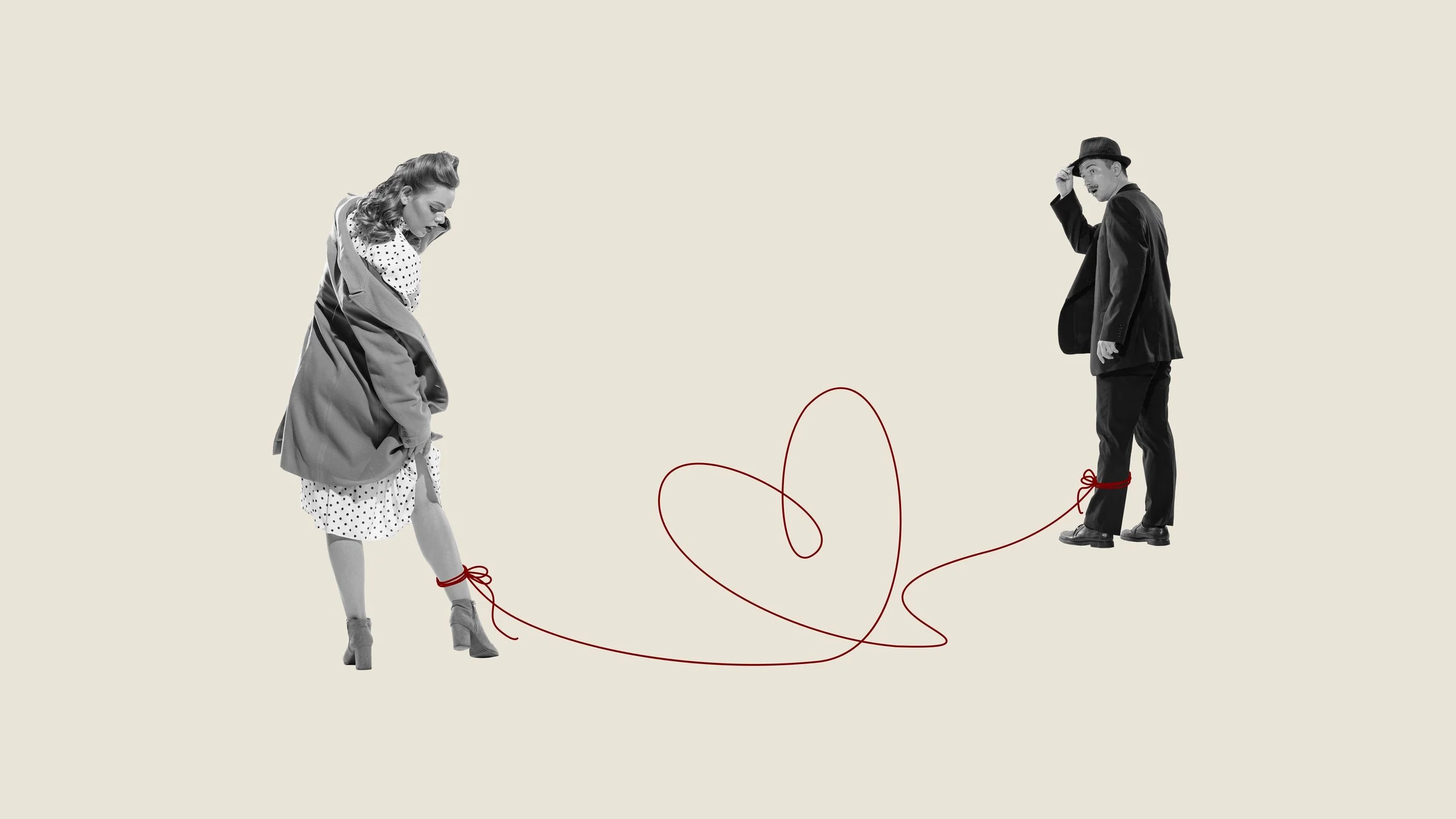
In long-term marriages, two patterns show up repeatedly. Most couples have some version of anxious and avoidant dynamics. These labels are not insults, and they are not diagnoses. They are patterns that formed long before you ever met your spouse. If you lean anxious in attachment, you tend to be highly attuned to emotional shifts. You notice tone changes, distance, and delayed responses. When you sense disconnection, your instinct is to move toward your partner. You ask questions. You initiate conversations. You want reassurance. If your partner pulls away, your anxiety increases, and you pursue harder because closeness feels like safety. On the other side, if you lean avoidant, you often value independence and composure. Emotional intensity can feel overwhelming rather than comforting. When tension rises, your instinct is to create space. You get quiet. You become logical. You focus on solving the problem rather than exploring feelings. If your partner gets louder emotionally, your system interprets it as pressure, and you withdraw further to calm things down.
Here is the crucial part: neither of these patterns is wrong. Both were developed for good reasons. Anxious strategies often formed in environments where connection felt inconsistent, and staying engaged increased the likelihood of being seen. Avoidant strategies often formed in environments where emotional expression was dismissed or unsafe, so self-containment became a strength. These patterns once protected you. The challenge is that what protects you individually can unintentionally strain your marriage. The anxious partner believes, often unconsciously, that if they don’t push in, the relationship will drift. The avoidant partner believes that if they don’t step back, everything will escalate out of control. Both are trying to preserve the relationship. They just move in opposite directions.
Not long ago, I worked with a couple I’ll call Daniel and Maria. They had been married for 12 years and were exhausted. Maria described feeling alone in the marriage. She said she had to “fight for conversation” and that any serious topic turned into Daniel shutting down. Daniel, on the other hand, felt constantly criticized. He described walking into conversations already bracing for disappointment. In session, it became clear that Maria’s frustration was rooted in fear. When Daniel withdrew, she felt invisible. When she felt invisible, she pushed harder. Daniel experienced her intensity as confirmation that he could never get it right, so he went quiet to prevent things from getting worse.
One afternoon, I asked them to slow down a recent argument. Instead of recounting what was said, I asked what they felt in their bodies. Maria admitted her chest felt tight and her stomach dropped when Daniel looked away. Daniel admitted his shoulders locked up and his mind went blank when Maria’s voice sharpened. In that moment, they both realized something important. They were not trying to hurt each other. They were trying to protect themselves from feeling unsafe. Once we reframed their conflict as attachment panic rather than character flaws, the room softened. Maria could say, “When you go quiet, I get scared that I don’t matter.” Daniel could respond, “When you come at me strongly, I feel like I’m failing and I want to disappear.” That shift did not eliminate all conflict, but it transformed how they understood it. They began recognizing the cycle in real time and interrupting it with curiosity instead of accusation.
Attachment patterns often intensify as the years go by. Early in a relationship, chemistry and novelty smooth over insecurity. You assume positive intent more easily. But over time, life adds stress. Careers demand more and children require energy. Financial pressures, health concerns, extended family dynamics, and unresolved hurts accumulate. Under sustained stress, the nervous system becomes more reactive. A delayed text can feel loaded. A distracted response can feel dismissive. A tense tone can feel catastrophic. Couples often say, “We never used to fight like this.” What they are really noticing is that attachment sensitivity increases when emotional reserves are depleted.
Secure attachment in marriage does not mean you never argue. It does not mean you are always calm or perfectly regulated. Security is built through responsiveness and repair. It grows when partners consistently send the message, “I see you. You matter to me. I am not going anywhere.”
For the anxious partner, growth often looks like learning to slow down and regulate before escalating. It means expressing needs directly rather than through protest behaviors. For the avoidant partner, growth often looks like staying present during discomfort instead of retreating. It means engaging emotionally even when it feels vulnerable. Neither partner is asked to become someone else. They are invited to stretch slightly beyond instinct for the sake of connection.
In my own marriage, once we understood our attachment dynamic, something shifted. My wife’s request to talk was not an accusation; it was a bid for connection. My retreat was not indifferent; it was a shield against feeling inadequate. When we began naming what was happening in real time, we moved from accusation to curiosity. Instead of asking who was wrong, we started asking what fear had just been triggered. That subtle shift changed the tone of everything. We were no longer opponents trying to win. We were partners trying to understand.
If you tend to be the more anxious partner, you are not too much. Your longing for closeness is not weakness. It reflects a deep value for connection. If you tend to be the more avoidant partner, you are not cold or incapable of intimacy. Your instinct to create space likely developed to maintain stability. The good news is that attachment patterns are not fixed traits. Research consistently shows that secure attachment can be built over time through consistent, corrective emotional experiences. When partners respond to each other with steadiness, when they repair after conflict, when they learn to regulate together instead of against each other, the nervous system recalibrates.
In our work at Align Couples Therapy, we spend less time debating who is right in an argument and more time understanding what was happening underneath it. What fear was activated? What story did each partner’s nervous system tell? What did each person need in that moment to feel secure? When couples begin to ask those questions, something hopeful happens. The intensity of conflict decreases because it is no longer fueled by misinterpretation. Instead of assuming malice, partners begin assuming vulnerability.
Long-term marriage is not about eliminating attachment triggers. It is about learning to navigate them together. The goal is not perfection. It is responsiveness. It is knowing that even when you misstep, you can repair. If you and your spouse feel stuck in the same argument on repeat, if one of you feels like you are always chasing while the other feels like you are always retreating, it does not mean your marriage is broken. It likely means your attachment systems are colliding.
You are not crazy… You are attached. And when attachment is understood rather than feared, it becomes the very pathway to deeper intimacy.
If you would like to explore attachement, you can make an appointment with Ross here.