The Power of Feeling Heard: Why Reflective Listening Changes Everything in Marriage
/One of the quiet tragedies of long-term relationships is how easy it becomes to talk all the time while feeling less and less understood.
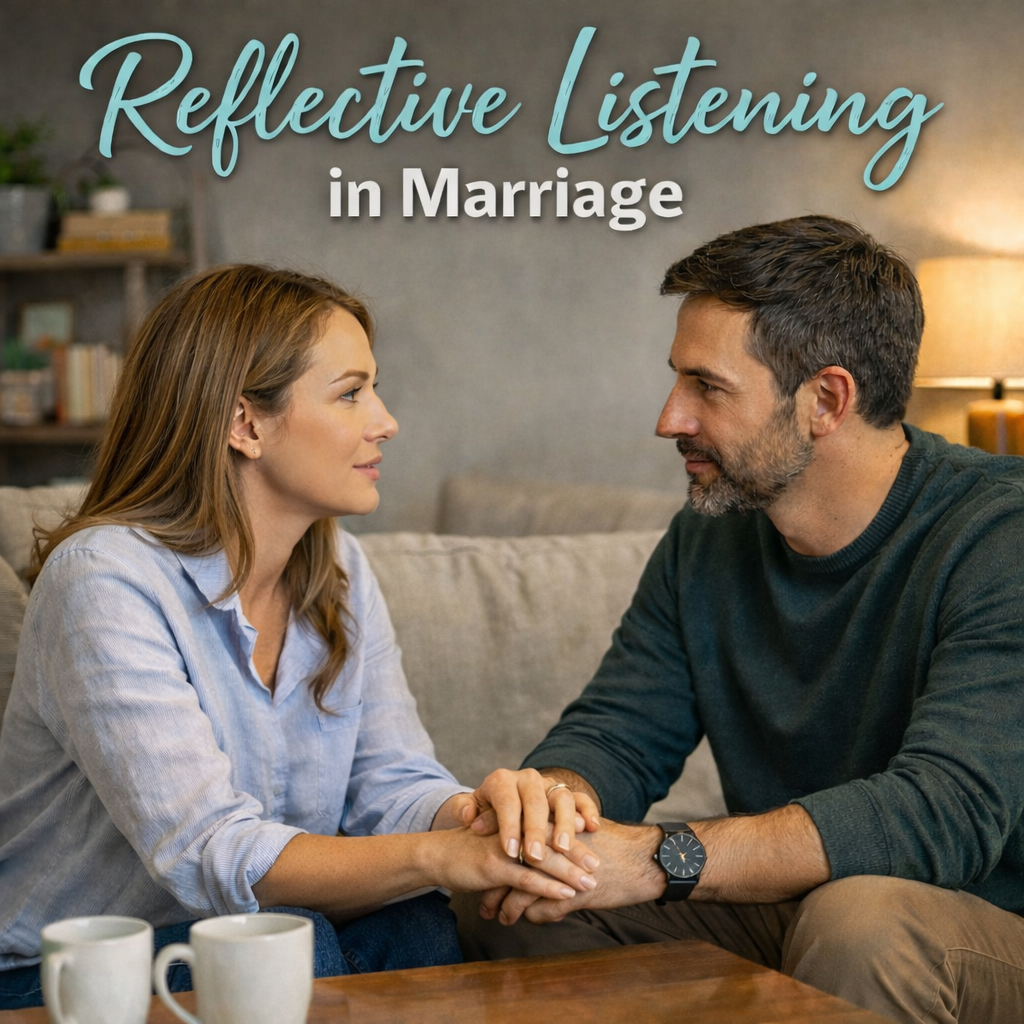
Reflective listening in marriage
Couples sit on the same couch, share the same bed, raise the same kids, and still feel profoundly alone. Not because there is no conversation, but because there is so little connection inside the conversation.
In my office, I see this every week. One partner is explaining something that matters deeply to them. The other is nodding, but their eyes are distant. Or they are already gearing up to respond. Or they are scrolling their phone. A few minutes later, both of them walk away feeling frustrated. One feels invisible, and the other feels attacked.
That gap is where relationships slowly erode. Reflective listening is one of the simplest and most powerful ways to close that gap.
Years ago, my wife and I were driving somewhere, and I was deeply convinced that I knew exactly where we were going. I had been there before. I felt confident. She gently said something like, I think we are supposed to turn back there. Now here is the part that will surprise no one who knows me. I did not reflect that. I did not say, “What I hear is that you are unsure about our direction.” I said, “No, this is right.”
Five minutes later, we were absolutely not right. When we finally pulled into a random parking lot to reroute, she was quiet. I could tell something else was going on. I asked her what she was feeling, and she said, “It is not even about being wrong or right. It is that you never listen when I tell you something.”
That hit harder than the missed turn. She was not upset about the GPS; she was upset about not feeling heard. That is what reflective listening addresses. Not directions.. connection. Reflective listening means that one partner speaks and the other listens with the goal of understanding rather than responding. After the first partner shares, the listener reflects back what they heard in their own words and checks if they got it right.
In the Gottman Method, this is a way of building Love Maps and turning toward your partner instead of away. When someone shares a feeling or concern, they are making a bid for connection. Reflecting what you heard is how you say, I am here with you.
In Emotionally Focused Therapy, reflective listening creates emotional safety. When someone hears their own experience accurately mirrored back, their nervous system calms. They feel less alone, less defensive, and more open. This is not about technique; this is about emotional survival inside a relationship.
Most of us were never taught how to listen emotionally. We were taught how to solve problems, debate, or protect ourselves. So when your partner says, I feel lonely, your brain often goes straight into defense, fixing, or counterattack.
Defense says, “That is not true.” Fixing says, “Here is what you should do.” Counterattack says, “Let me tell you how I feel.” None of those responses makes your partner feel understood. They make them feel more alone. Feeling heard is often more important than being agreed with. Reflective listening allows disagreement without disconnection.
Imagine your partner says, “I feel like you do not really see how exhausted I am.” A defensive response might be, “I work too, you know.” A fixing response might be, “You should go to bed earlier.”
A reflective response is, “What I hear is that you feel worn down and like I am not really noticing how much you are carrying. Did I get that right?” That one sentence can change the entire emotional climate.
If you want to be heard, how you share matters. Slow down. Speak from your inner experience instead of accusations. Use I feel statements instead of you always statements. Keep your thoughts short enough to be reflected back. Then invite reflection. You can say, “Can you tell me what you heard me say?” That keeps the focus on connection instead of debate.
Your job is to understand, not to win. When your partner finishes speaking, pause. Then reflect back what you heard in your own words, including both what happened and how they feel. Then ask, “Did I get that right?” If they say no, adjust. If they say yes, stay there. Do not rush to defend or explain. Let the feeling be felt. That moment is where healing happens.
Reflective listening can feel awkward and even threatening. It can feel like you are giving up your side. But you are not giving up your truth. You are making room for theirs. Emotional safety grows when both people feel heard.
You do not need perfect conversations. You need small, consistent moments. Try this once a day. One partner shares something meaningful. The other reflects it back before responding. Even two minutes of this builds a connection. Over time, you will notice less escalation, more softness, and more teamwork.
I have watched couples who had not felt understood in years finally soften toward each other because one person took the time to listen without correcting. That is the power of reflective listening. It reminds your partner that they matter. And in marriage, that changes everything!
If you’d like to make an appointment with Ross, you can contact him here.